No, I won't go on about Breaking Dawn, the movie... although my daughter has them all, and I probably bought at least one or two of them for her.
This is just a play shot with the iPhone from a few mornings ago. I noticed the fog lifting and the sun starting to break through, so I went into the back field to shoot the sunrise.
I like the hazy, almost grainy quality of the image. The contrast of bright colour against the shaded and darker trees is interesting and somewhat balanced.
The panoramic shots are much more difficult to frame as they are not a static shots. The left is easy to arrange but where exactly the right will end is vague although somewhat controllable if I want to stop the image sooner than the full pan.
Then there are the light levels. The camera adjusts according to the starting position (the left side) and keeps the same setting throughout making it impossible (although I haven't experimented much) to use a light value from the middle of the anticipated view. If I wanted to use the right side values I need to turn the phone upside down and scan from right to left creating the image upside down... which is probably easy enough to flip after the fact.
The panoramic feature is functional but not certainly not flexible.
Jeff.
Friday, November 30, 2012
Sunday, October 7, 2012
ABB Stock Market Trading
I've been playing around with one of my old trading plans for the last couple of weeks and pulled out my tracking chart for ABB. They happen to be a power and automation company (robots and power converters) but that really has no bearing on why I was following them as I had to look them up in order to find out what they really were.
If this post interests you, here is a link to the blog that continues the thread beyond this post.
Basically I feel that the charts tell the whole story and the price reflects that story. The issue I have always had with fundamental or value investing is that you must try to discern the story ahead of time. While some of the company's fundamental data will reflect it's overall health, it does not indicate what will happen tomorrow and certainly does not predict the future price. Although some make out well with this style of investing I just don't have the patience to sit on something long enough to find out that I was wrong in my assumptions.
If you look at Apple (AAPL), everyone thought that with the demise of Steve Jobs, Apple stock would drop. While it did for a short period, it certainly was only a blip in the price as it quickly surpassed the price that it had reached during Steve's reign. I sometimes give my butt a little kick for not buying it when I first looked at it, around $85. Meanwhile, it is not one of the stocks that I follow for the purpose of trading, the price is too high for my style of trading and account size.
Back to ABB.
This has been one of my worst performing selections so I figured what better one to choose for setting up my spreadsheet to re-run the old numbers through my improved simplified plan. Performance is relative to the plan implemented afterall. Of course I expected an overall loss based on the look of the historical chart and my previous simplified plan. Something like a $9.50 loss per share over a 10 year period while only trading long and running every setup. With a win rate of 37.5%, no wonder.
In almost all of my studies, trading with the trend has a better win rate. Simple trend determination just using a couple of simple moving averages and their cross overs. It doesn't need to be complicated as these are not trade indicators, just a quick guide to remove the subjective decision of whether or not a trend is up or down.
Switching to simple trend following, this loss drops to $2 per share with a 54.6% win rate.
Adding more trades using varied or staged entry targets bumps the total returns to $3.50 per share.
Part of the higher profitability of this version of the plan has to do with taking more trades overall with the idea that if the first trade stops out for a loss, the remaining individual trades based on the same trigger may not. This creates a greater edge, 14% greater as the new win rate is 68.6%. There are 72% more trades so in order to better compare them, the average return per trade was a $0.17 loss vs an $0.18 profit per trade.
Next, using the same plan but implementing a half trade trailing profit stop. A Virtual Trailing Stop Order (VTSO) will work well in this particular application. This could be applied a few ways but I would choose to enter the trades using the same method as above with the VTSO applied to half of the total trade. If the price proceeds to run up past the initial profit target, the VTSO will capture more profits than otherwise might be had. The very worst case once the initial profit target is hit is that the remaining half of the trade could stop out at break even, it will never turn into a loss at that point. Of course in all cases where the initial target is not hit, the entire trade stops out for a loss. The upside potential is greater than the downside which makes this style of trade worth the added complexity.
VTSO partial profit stop, $12.13 per share profit with the same win rate of 68.6%. Same trades, just managed differently.
Seeing as the stock started out around $5 when this plan starts, the overall Return On Investment... if you want to call this an investment... is over 240%. That, over 10 years, is certainly worth the effort.
It is worth mentioning that all of my results are based on nice even price numbers, 25, 50 cent increment or $1 depending upon the value of the stock at the time of the trade. Using the VTSO provides that the profit may be at a price relative to the penny increment moves of the price but will be above break even in all cases when the initial target is attained. This puts the real VTSO at a non-zero profit value almost immediately. Entries and exits are subject to a certain amount of slippage and variations in opening prices can affect the entries, although this, like the VTSO, would be in my favour as I use limit orders to enter and exit at targets. The real odd factor might be the overnight gap in price. Those occur but can go in either direction so they are tough to try factor in ahead of time. I figure that the odds are, while trading with a trend, better that the gap be in my favour but will concede a 50/50 shot at getting them right.
Next up, the short sell. This post is already too long.
If this post interests you, here is a link to the blog that continues the thread beyond this post.
Jeff.
If this post interests you, here is a link to the blog that continues the thread beyond this post.
Basically I feel that the charts tell the whole story and the price reflects that story. The issue I have always had with fundamental or value investing is that you must try to discern the story ahead of time. While some of the company's fundamental data will reflect it's overall health, it does not indicate what will happen tomorrow and certainly does not predict the future price. Although some make out well with this style of investing I just don't have the patience to sit on something long enough to find out that I was wrong in my assumptions.
If you look at Apple (AAPL), everyone thought that with the demise of Steve Jobs, Apple stock would drop. While it did for a short period, it certainly was only a blip in the price as it quickly surpassed the price that it had reached during Steve's reign. I sometimes give my butt a little kick for not buying it when I first looked at it, around $85. Meanwhile, it is not one of the stocks that I follow for the purpose of trading, the price is too high for my style of trading and account size.
Back to ABB.
This has been one of my worst performing selections so I figured what better one to choose for setting up my spreadsheet to re-run the old numbers through my improved simplified plan. Performance is relative to the plan implemented afterall. Of course I expected an overall loss based on the look of the historical chart and my previous simplified plan. Something like a $9.50 loss per share over a 10 year period while only trading long and running every setup. With a win rate of 37.5%, no wonder.
In almost all of my studies, trading with the trend has a better win rate. Simple trend determination just using a couple of simple moving averages and their cross overs. It doesn't need to be complicated as these are not trade indicators, just a quick guide to remove the subjective decision of whether or not a trend is up or down.
Switching to simple trend following, this loss drops to $2 per share with a 54.6% win rate.
Adding more trades using varied or staged entry targets bumps the total returns to $3.50 per share.
Part of the higher profitability of this version of the plan has to do with taking more trades overall with the idea that if the first trade stops out for a loss, the remaining individual trades based on the same trigger may not. This creates a greater edge, 14% greater as the new win rate is 68.6%. There are 72% more trades so in order to better compare them, the average return per trade was a $0.17 loss vs an $0.18 profit per trade.
Next, using the same plan but implementing a half trade trailing profit stop. A Virtual Trailing Stop Order (VTSO) will work well in this particular application. This could be applied a few ways but I would choose to enter the trades using the same method as above with the VTSO applied to half of the total trade. If the price proceeds to run up past the initial profit target, the VTSO will capture more profits than otherwise might be had. The very worst case once the initial profit target is hit is that the remaining half of the trade could stop out at break even, it will never turn into a loss at that point. Of course in all cases where the initial target is not hit, the entire trade stops out for a loss. The upside potential is greater than the downside which makes this style of trade worth the added complexity.
VTSO partial profit stop, $12.13 per share profit with the same win rate of 68.6%. Same trades, just managed differently.
Seeing as the stock started out around $5 when this plan starts, the overall Return On Investment... if you want to call this an investment... is over 240%. That, over 10 years, is certainly worth the effort.
It is worth mentioning that all of my results are based on nice even price numbers, 25, 50 cent increment or $1 depending upon the value of the stock at the time of the trade. Using the VTSO provides that the profit may be at a price relative to the penny increment moves of the price but will be above break even in all cases when the initial target is attained. This puts the real VTSO at a non-zero profit value almost immediately. Entries and exits are subject to a certain amount of slippage and variations in opening prices can affect the entries, although this, like the VTSO, would be in my favour as I use limit orders to enter and exit at targets. The real odd factor might be the overnight gap in price. Those occur but can go in either direction so they are tough to try factor in ahead of time. I figure that the odds are, while trading with a trend, better that the gap be in my favour but will concede a 50/50 shot at getting them right.
Next up, the short sell. This post is already too long.
If this post interests you, here is a link to the blog that continues the thread beyond this post.
Jeff.
Monday, September 24, 2012
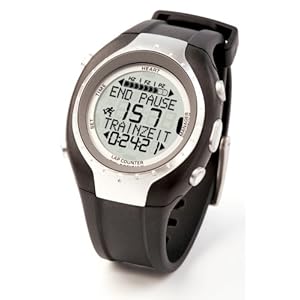
Cateye vs Sigma, Heart rate monitor choice
I had a Cateye HR10 last year... actually two of them.
Generally it (they) functioned fine, as far as the settings and modes were concerned. I only used it to track my current heart rates so I never got into setting it up for any exercise profiles. An issue developed where the monitor would display unusually high heart rates sporadically with no apparent cause, well over 200 bpm. This happened on my bike so I tried it running in order to eliminate the bike wheel transmitter to no avail. I returned it and tried another identical unit, same result.
I had decided that, somehow, it must be me, so I dropped the idea of a monitor altogether. I didn't really need one that badly any more anyway.
Rather than just return the Cateye the second time by the vendor... long story. It was replaced with a Sigma PC15... similar enough to be comparable.
So far, a bike ride and a few runs and everything seems fine, the box says it's ECG accurate... time will tell..
There is a little more going on with the display but it's not bad. I didn't setup the heart rate zones so they were default and I inadvertently left the beep alert active. It was a little odd having the monitor beep every once in a while as I went from one zone to the next, that certainly needs adjustment. The chest strap has larger electrode pads, a good sign I think and as comfortable as any I've used before.
The instructions leave a bit to be desired. "Please take care to insert the battery the right way around (plus/minus)." There is no mention of which way the battery is supposed to go nor is there a marking on the case or cover. Lots of other almost equally confusing wording.
I do like the band and clasp. The little loop that catches the end of the extra strap keys into one of the holes so it doesn't wander and the holes are square rather than round, which may be less prone to hole stretching. The fit happens to be better for me... just bang on rather than a tad tight or a tad loose but that might be due to the slightly more elasticity in the strap too.
I wasn't aiming to really compare these two as I would say that either would work as well as the other. I might suggest that the Cateye may be the lesser of the two only due to the issue with the run away heart rate.
Jeff
Saturday, August 25, 2012
Porsche, a first drive
My last post was about a new car purchase, this one is not, at least not about my car.
I traveled to Toronto on the weekend past to visit a friend having no idea that he was a Porsche owner, albeit his recently acquired Porsche. He's pretty laidback about the whole thing so it's not like he would run around talking about his car... I might not be so cool.
After being out for dinner on Saturday he handed me the keys to drive back and, even though I was hesitant, I only say no to something like that once... maybe twice if I'm pretty sure the offer won't disappear. I will admit that this was my first time behind the wheel of a Porsche of any style. This was a 911 Carrera 4S in black.
I could go on about the comfort, dash layout and bells and whistles all day, but that's not what this car is all about. My focus was learning where some of it's limits, and mine, might lay while still getting the car back in one piece... yes, it was all about the fun.
Step One: Shifting.
The transmission is the PDK dual clutch setup which is the smoothest automatic transmission I have ever felt, particularly when I consider that it is transferring up to 385 HP through 7 gears. Yah, I could have just left it in full auto, but I like to shift. I want to know what gear I am in and choose which gear to use given what I might be trying to accomplish at the time... sometimes it might just be a downshift to hear the engine wind down.
There are paddle shifters, I didn't touch those, not my favourite gimmick. The shifter is easy enough, pull to the left and it changes to "manual" mode. Typical, push forward to upshift sequentially and pull back to downshift sequentially. The manual shifting loses some of the smoothness of the full auto but that was partly my fault...I could not get around trying to "pull" back to second, "push" to third, "pull" to fourth etc. I kept losing track of where I was. Sadly I cannot compare against a manual Porsche tranny as I have not driven one.
There are multiple settings for the shifting performance, sport plus is aggressive, maxs out in 6th gear and will drop into 2nd when the driver is equally aggressive... yup, it works. I was shocked when this happened the first time as we were poking along at 110Kph and the tach buried itself deep into the red line... perhaps a little past the ideal power band but there seemed to still be some left to give.
Note to self: Don't try that at home.
Oh, even in manual mode it will downshift, I wasn't expecting that... I thought manual meant manual. Ultimately the car decides, so I think all that really happens is I choose the top gear.
Switching to "not so sporty" allows 7th gear to come into play and will only downshift to 3rd at speed. I would hesitate to say it that it is more sedate as there is still lots of "go" to be had here. Rather than a scream it was a more throaty pitch and a comfortable push into the seat. Sport plus is a little too much for the highway.
Step Two: Blind Spots.
It was dark at this point and the 401 was busy. Right lane changes were a little unnerving as I was not familiar with where my blind spot was, I didn't know for certain that there wasn't a car sitting just off of my rear quarter that I couldn't see. The absolute LAST thing I wanted to do was to change lanes and, well, do some damage. Normally I am very aware of cars on the highway and I know where they all are... this traffic was not behaving predictably as there were lots of faster cars changing multiple lanes from behind.
Not good.
Rather than looking back to see what's coming I looked ahead to see what was already in my line of sight, for certain. Punching the accelerator to jump ahead and zip over where I knew that there was a spot at least big enough to fit into. This worked well, allowed a little more pedal play and let me test the agility of the car a little bit.
Step Three: Cornering.
The aforementioned lane change issue took us on a longer ride than planned as I missed a couple of exits do to my initial timidity in changing lanes.
Introducing the "U" turn.
I didn't do one initially as I didn't know what the turning radius was and I knew that I couldn't (or shouldn't) attempt a power drift to make it... yup, I've seen some of those You Tube videos with the idiots in their fast cars attempting the same thing and laughed at the results. Pulling into a quiet intersection to turn around I realized that I could have easily made it with lots of room to spare... I am used to driving Hondas and they have a tight turning radius... Porsche is tighter yet and roll is next to unheard of.
Given that this beasty has all wheel drive and that everything up to this point had produced no noticeable slip in the rear end I tried a full power turn from a standing start. Basically a 90 degree right turn with the pedal to the mat. Result, a minor bit of slip due likely to some sand and nothing short of pure acceleration exactly where I pointed it. To be honest I probably shouldn't have tried that as I wasn't 100% certain it would behave even though I was prepared for lots of counter steering.
Accelerating out of the turns produced a very comfortable groove and, as cliche as it sounds, the car corners as if it were on rails.
While the purpose of my trip was not to drive a really nice sports car, it certainly was a cool perk. A Porsche is not on my list of immediate purchases but I could certainly get used to one in my driveway.
Maybe a nice sedan...
Jeff.
I traveled to Toronto on the weekend past to visit a friend having no idea that he was a Porsche owner, albeit his recently acquired Porsche. He's pretty laidback about the whole thing so it's not like he would run around talking about his car... I might not be so cool.
After being out for dinner on Saturday he handed me the keys to drive back and, even though I was hesitant, I only say no to something like that once... maybe twice if I'm pretty sure the offer won't disappear. I will admit that this was my first time behind the wheel of a Porsche of any style. This was a 911 Carrera 4S in black.
I could go on about the comfort, dash layout and bells and whistles all day, but that's not what this car is all about. My focus was learning where some of it's limits, and mine, might lay while still getting the car back in one piece... yes, it was all about the fun.
Step One: Shifting.
The transmission is the PDK dual clutch setup which is the smoothest automatic transmission I have ever felt, particularly when I consider that it is transferring up to 385 HP through 7 gears. Yah, I could have just left it in full auto, but I like to shift. I want to know what gear I am in and choose which gear to use given what I might be trying to accomplish at the time... sometimes it might just be a downshift to hear the engine wind down.
There are paddle shifters, I didn't touch those, not my favourite gimmick. The shifter is easy enough, pull to the left and it changes to "manual" mode. Typical, push forward to upshift sequentially and pull back to downshift sequentially. The manual shifting loses some of the smoothness of the full auto but that was partly my fault...I could not get around trying to "pull" back to second, "push" to third, "pull" to fourth etc. I kept losing track of where I was. Sadly I cannot compare against a manual Porsche tranny as I have not driven one.
There are multiple settings for the shifting performance, sport plus is aggressive, maxs out in 6th gear and will drop into 2nd when the driver is equally aggressive... yup, it works. I was shocked when this happened the first time as we were poking along at 110Kph and the tach buried itself deep into the red line... perhaps a little past the ideal power band but there seemed to still be some left to give.
Note to self: Don't try that at home.
Oh, even in manual mode it will downshift, I wasn't expecting that... I thought manual meant manual. Ultimately the car decides, so I think all that really happens is I choose the top gear.
Switching to "not so sporty" allows 7th gear to come into play and will only downshift to 3rd at speed. I would hesitate to say it that it is more sedate as there is still lots of "go" to be had here. Rather than a scream it was a more throaty pitch and a comfortable push into the seat. Sport plus is a little too much for the highway.
Step Two: Blind Spots.
It was dark at this point and the 401 was busy. Right lane changes were a little unnerving as I was not familiar with where my blind spot was, I didn't know for certain that there wasn't a car sitting just off of my rear quarter that I couldn't see. The absolute LAST thing I wanted to do was to change lanes and, well, do some damage. Normally I am very aware of cars on the highway and I know where they all are... this traffic was not behaving predictably as there were lots of faster cars changing multiple lanes from behind.
Not good.
Rather than looking back to see what's coming I looked ahead to see what was already in my line of sight, for certain. Punching the accelerator to jump ahead and zip over where I knew that there was a spot at least big enough to fit into. This worked well, allowed a little more pedal play and let me test the agility of the car a little bit.
Step Three: Cornering.
The aforementioned lane change issue took us on a longer ride than planned as I missed a couple of exits do to my initial timidity in changing lanes.
Introducing the "U" turn.
I didn't do one initially as I didn't know what the turning radius was and I knew that I couldn't (or shouldn't) attempt a power drift to make it... yup, I've seen some of those You Tube videos with the idiots in their fast cars attempting the same thing and laughed at the results. Pulling into a quiet intersection to turn around I realized that I could have easily made it with lots of room to spare... I am used to driving Hondas and they have a tight turning radius... Porsche is tighter yet and roll is next to unheard of.
Given that this beasty has all wheel drive and that everything up to this point had produced no noticeable slip in the rear end I tried a full power turn from a standing start. Basically a 90 degree right turn with the pedal to the mat. Result, a minor bit of slip due likely to some sand and nothing short of pure acceleration exactly where I pointed it. To be honest I probably shouldn't have tried that as I wasn't 100% certain it would behave even though I was prepared for lots of counter steering.
Accelerating out of the turns produced a very comfortable groove and, as cliche as it sounds, the car corners as if it were on rails.
While the purpose of my trip was not to drive a really nice sports car, it certainly was a cool perk. A Porsche is not on my list of immediate purchases but I could certainly get used to one in my driveway.
Maybe a nice sedan...
Jeff.
Thursday, August 23, 2012
New Cars: Toyota, Chev, Honda
It's new car time.
Our Honda Accord is crossing the 10 year mark and, even though it still has tons of miles left on it, there are repairs coming up that justify looking at new cars. Seeing that we have driven Hondas exclusively for 23 years, it's almost a no-brainer that we stick with a Honda... but we looked around a little.
Contenders were the Toyata Matrix and Chev Sonic.
The Matrix was OK, a little higher and less "performancy" than we would like. Going back to a stick makes the shifting feel a fairly major consideration and we weren't fond of it. In order to match the Civic in bells and whistles the price was higher... not by a lot but enough to be a factor. Also being a hatchback it has a rear window wiper which, from past experience with many versions of this setup, is less than ideal. The dash was not particularly inspiring either.
The Chev Sonic was not available in a stick to test so I had to make due with the automatic. Unlike Honda and Toyota most of the extras were all extras rather than being included in a package. Sometimes that is good and sometimes that is not so good. In this case I think not so good as it drives the price up quickly when trying to match a competitor's option package. The dash looked like an attempt at some sort of minimalism, interesting but small. It is also the first year for this model, not something I am fond of buying as it has no proven record yet.
The Honda Civic was the favourite going in so perhaps the whole comparison was not fair. Even so, it was good to have done it just to know for certain. The option package at the EX level was just a right mix of extras that included things like the integrated Bluetooth, full variable wipers, sunroof and stereo controls on the wheel. A feature that I really liked was that the dash display included the radio and information center and was mostly above the steering wheel, I think this is in all of the Civic's, not just the EX and higher. No need to turn my head to look at anything on the center console. Of course the shifting was silky smooth, as I would expect.
So we went with the Civic. We had a hard time deciding between the black and the titanium. The final deciding factor may seem odd but it came down to something seemingly so small. The colour matching mirrors only matched on the top half of the mirror assembly, the underside and mirror post were black, so it stood out just enough that we chose black. Now the mirrors will match more seamlessly.
With our old trade and using the current cash rebate incentive the final price was under $20,000... which I could not have managed with either the Sonic or the Matrix given mostly identical options selected.
Delivery is next Wednesday and we are looking forward to the new car experience once again.
Jeff.
Our Honda Accord is crossing the 10 year mark and, even though it still has tons of miles left on it, there are repairs coming up that justify looking at new cars. Seeing that we have driven Hondas exclusively for 23 years, it's almost a no-brainer that we stick with a Honda... but we looked around a little.
Contenders were the Toyata Matrix and Chev Sonic.
The Matrix was OK, a little higher and less "performancy" than we would like. Going back to a stick makes the shifting feel a fairly major consideration and we weren't fond of it. In order to match the Civic in bells and whistles the price was higher... not by a lot but enough to be a factor. Also being a hatchback it has a rear window wiper which, from past experience with many versions of this setup, is less than ideal. The dash was not particularly inspiring either.
The Honda Civic was the favourite going in so perhaps the whole comparison was not fair. Even so, it was good to have done it just to know for certain. The option package at the EX level was just a right mix of extras that included things like the integrated Bluetooth, full variable wipers, sunroof and stereo controls on the wheel. A feature that I really liked was that the dash display included the radio and information center and was mostly above the steering wheel, I think this is in all of the Civic's, not just the EX and higher. No need to turn my head to look at anything on the center console. Of course the shifting was silky smooth, as I would expect.
So we went with the Civic. We had a hard time deciding between the black and the titanium. The final deciding factor may seem odd but it came down to something seemingly so small. The colour matching mirrors only matched on the top half of the mirror assembly, the underside and mirror post were black, so it stood out just enough that we chose black. Now the mirrors will match more seamlessly.
With our old trade and using the current cash rebate incentive the final price was under $20,000... which I could not have managed with either the Sonic or the Matrix given mostly identical options selected.
Delivery is next Wednesday and we are looking forward to the new car experience once again.
Jeff.
Subscribe to:
Comments (Atom)